
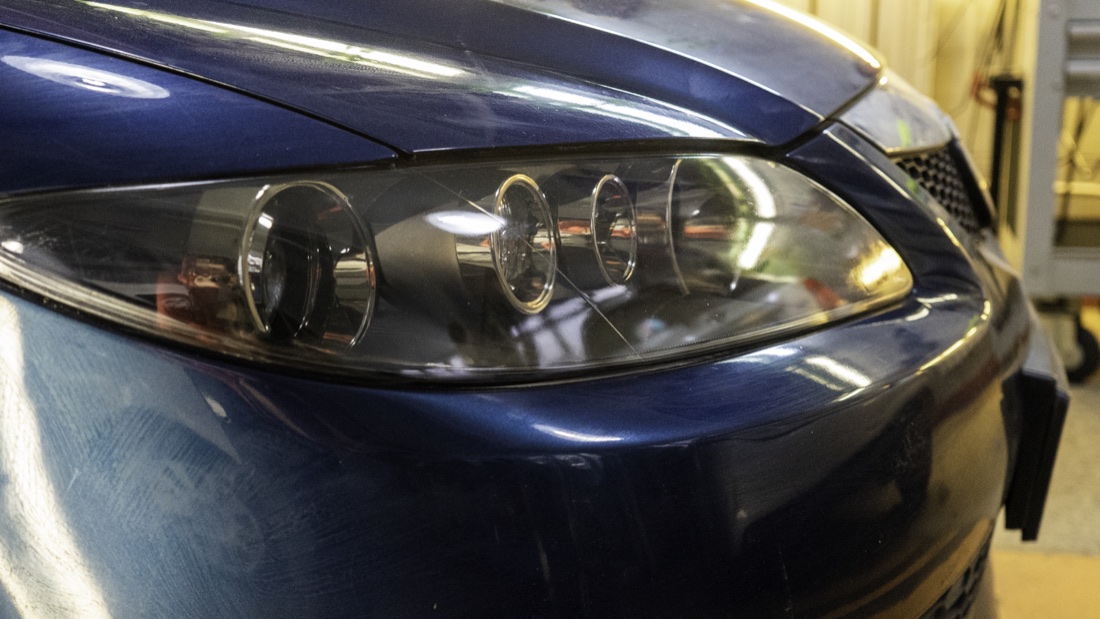
Headlight restoration
A headlight restoration course - the cost pays for itself after a few cars.
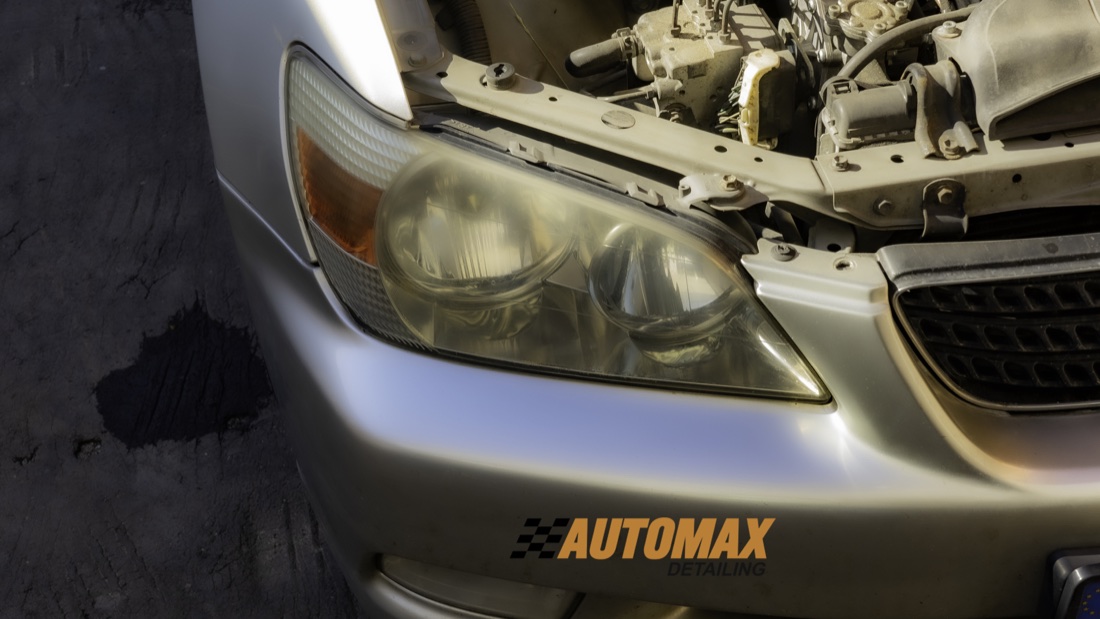
Clouded lights spoil the look of a car and make driving less safe. A restoration takes 50-90 minutes and is sought after at service stations, car washes and tyre shops. We work through the material from simple to complex cases.
What you will learn
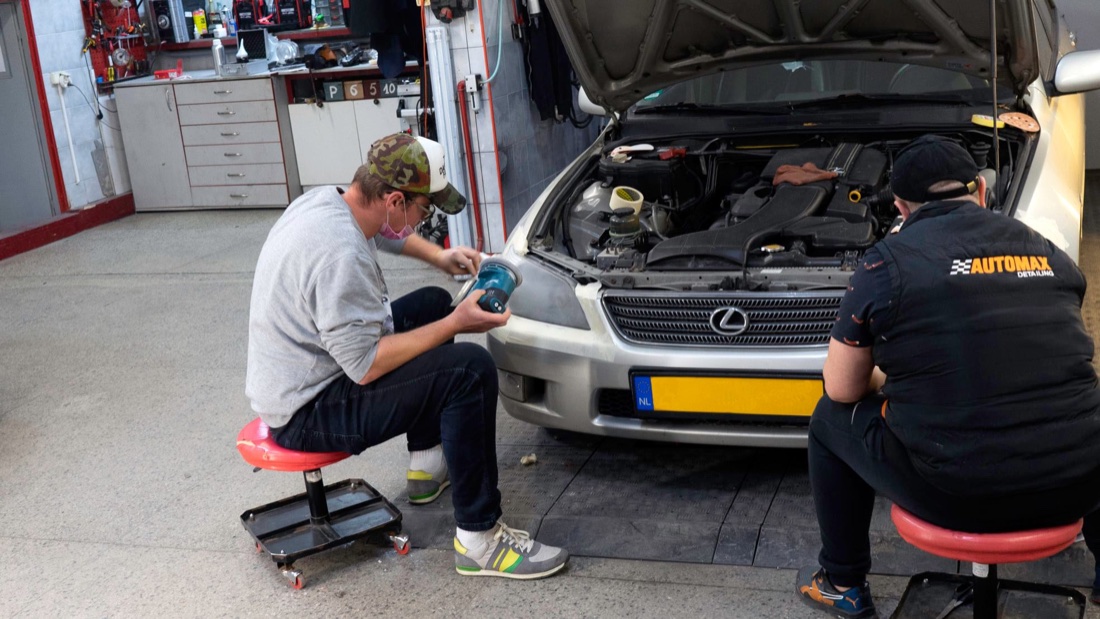
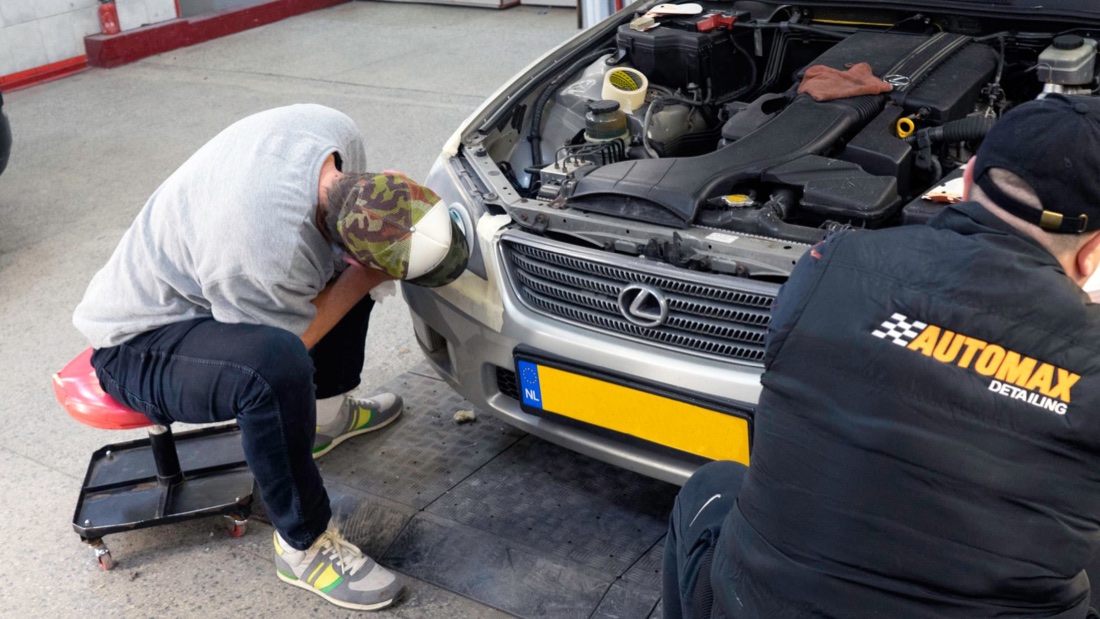
Maximum practice, minimum theory. You practise every technique on real cars under the trainer's eye.
- Assessing the condition of a headlight and deciding whether it can be restored
- Masking safely and preparing the light
- Wet sanding - choosing the paper grades
- Machine polishing to complete clarity
- Sealing with a UV coating so the result lasts
- Working with modern equipment and materials
- Setting up the bay and choosing the tools
See the course in action
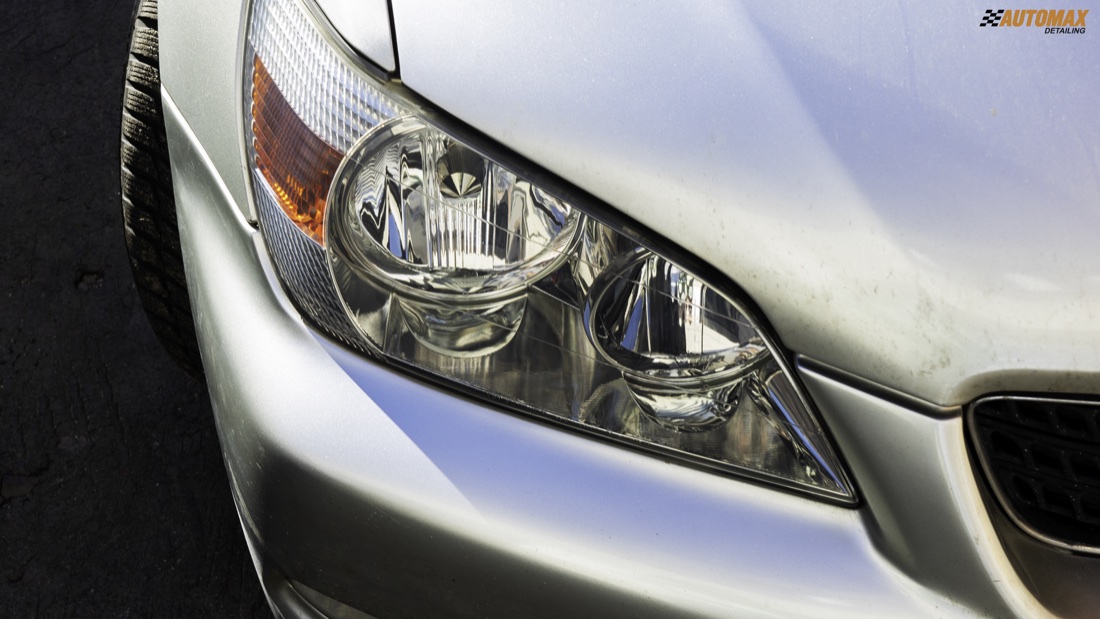
Headlight restoration, from a dull light to complete clarity.
An investment that pays off quickly
Learning headlight restoration is an investment that brings measurable returns as soon as the course is over. You work with modern materials and equipment.
From simple to complex
The material is presented on a "simple to complex" principle, consistently and with each topic reinforced as we go.
A service for any workshop
The skill is useful at service stations of any size, and at car washes and tyre shops too. The service needs no extra space.
It pays for itself after just a few cars
A quick, profitable service in growing demand.
Sign up for a courseThe investment pays for itself after a few cars. Ask about funding for the course.
You do not have to pay the whole cost yourself
We work with district labour offices and the Military Pensions Office, and we guide you through the paperwork. Part - and often all - of the cost of the course can be covered by funding.
Questions and answers
Pick a topic - we have gathered the questions our trainees ask before enrolling and during the course.
About this courseSpecifically about this course and how it runs. 4 questions
How much does the headlight restoration course cost?
PLN 2,500 net - a course with a full hands-on part.
Is it a profitable service?
Yes - a single restoration takes 50-90 minutes, and the investment in the course pays for itself after just a few cars.
Do I need a large workshop?
No - the service needs no large space; it works just as well at a car wash or a tyre shop.
Will I get a certificate?
Yes - on completing the course we issue a personalised confirmation of your skills.
Before you enrolWho can come and what you need to start. 5 questions
Do I need experience in the motor trade?
No. The course starts from scratch: from how sheet metal behaves and how to read the reflection of light in the paint. Most of our trainees had never worked on cars before.
Do I need my own tools?
No. We provide the equipment for the duration of the course. In the extended package a set of tools with lighting stays with the trainee and lets them start work right after the course.
How many people are in a group?
The groups are deliberately small. Learning consists of constantly correcting your movement and the angle of the tool, and the instructor comes up to each trainee a dozen or more times a day - with a large group that would not be possible.
How do I enrol and is a deposit needed?
A phone call or the form on the website is enough. We agree the date, confirm your place in the group and send you the full set of practical information. Payment details we discuss individually.
Can the course be combined with a full-time job?
The course runs for ten working days in a row, so it needs time off. Splitting it over weekends would be more convenient but worse for learning - a manual skill is built through continuity, and week-long breaks set your progress back.
How it runsWhat a day looks like, where you sleep, what you eat. 5 questions
What does an ordinary day of the course look like?
In the morning a demonstration by the instructor, then work on panels, after lunch a harder version of the same task, and at the end of the day a joint review of the results under the lamp. The days are full, but the tiredness is mental rather than physical - this is precision work, not heavy lifting.
How much is practice and how much theory?
About 80 per cent of the time is hands-on work on real body panels, not on flat practice sheets. There is as much theory as you need to understand what you are doing.
Is accommodation and food provided?
Yes. The price of the course includes 10 nights' accommodation for people from outside Warsaw and lunch on every day of the course. The only extra charge is for a double room, for those who prefer that standard.
Where do the classes take place?
In our workshop in Warsaw, at ordinary working bays. You work in the same light and on the same equipment we use for customers' jobs.
What should I bring?
Comfortable work clothes, flat-soled shoes and something to take notes with - especially for writing down the disassembly order for particular models. There is no need to bring tools or protective clothing.
Price, funding and what comes afterPayments, documents and support after the course. 5 questions
What exactly is included in the price of the course?
10 days of training in a small group, 10 nights' accommodation, lunches, materials and practice panels, a certificate of completion and two weeks of work placement in our workshop after the course ends.
Can the payment be spread into instalments?
Yes, the course can be paid for in instalments. We agree the details individually when you enrol.
Can the course be funded?
Yes. Our courses run under a quality management system compliant with ISO 9001:2015 and are available in the Development Services Database, which opens the way to funding for companies and self-employed people. Some of our trainees are also sent by the labour office.
What document do I get after the course?
A certificate of completion, issued after the practical exam. We also issue an invoice - including one made out to a company, so the cost can be booked.
Can I count on help after the course?
Yes. Besides the two weeks of work placement, contact stays open: our graduates ring with questions about particular jobs, quotes and difficult repairs long after the course has ended.
Sign up for a course
Leave your contact details, we will call back and agree a date. We usually reply the same day.